0330 123 4609
Menu
We wrapped up the numbers to share the most impressive highlights and reveal the UK’s most recycled phone of the year.

Written by Sneha Kashyap, Content and PR Executive | Conscious Consumption and Tech Trends
Last updated on 22 December 2025
Welcome to Compare and Recycle’s Year in Review! Every year, tens of thousands of phones are recycled through our comparison site. As 2025 comes to a close, we’ve analysed the data to share the biggest highlights and reveal which smartphones the UK recycled the most this year. Keep reading to find out which devices topped the charts.
For smartphone makers, 2025 marked a year of stabilisation and maturity after several turbulent years. While global shipment growth remained modest, consumers continued upgrading - particularly driven by improvements in cameras, battery efficiency, and AI-powered features.
Apple continued to dominate headlines with the controversial iPhone Air released alongside the latest iPhone 17 series, which has been at the centre of the US-China trade war this year. Meanwhile, Samsung strengthened its premium Android offering with the Galaxy S25 models and the release of its first trifold smartphone.
Despite all the buzz around new devices, it turns out many of us still struggle to manage what’s already on our phones - 69% of Brits admit they’re “digital hoarders”, hanging onto unused files, photos and apps long after they’ve upgraded. And it’s not just adults glued to screens: recent research reveals that children in the UK are spending an average of 6 hours and 22 minutes on screens every day, far beyond recommended limits.
But what about the UK’s most recycled phones? Compare and Recycle has the answer. 2025 has seen a wide range of smartphones being recycled, with the release dates of models traded stretching all the way back to 2016.
Phone Recycling 2025: Compare and Recycle Highlights
iPhone 13 was the most recycled phone, bringing in over £2.7 million for consumers after trade-in.
People in the UK are holding onto their phones for an average of 4.1 years (an improvement from 3.8 in 2024), with the iPhone 8 leading the marathon of mobile endurance of 8.3 years of ownership.
Over 22.6t of tech were prevented from becoming e-waste, pocketing consumers just shy of £33.9 million.
Despite ongoing debates over iPhone vs Android, the UK is firmly dominated by iPhones. It’s unsurprising to see that iPhones were the most traded-in smartphones in general, in total generating over £30.3 million for UK consumers.
But which iPhone led the way as the most recycled in 2025?
The iPhone 13 takes the crown in 2025 as the most recycled phone overall, saving its owners collectively a whopping £2.7 million, while offsetting an estimated 864,694 kg of carbon dioxide emissions. To put it in perspective, this money is enough to pay an annual electricity bill for 1468 UK households.
The long-standing recycling champion, iPhone 11, slips to second place. Consumers collectively cashed in £1.32 million! On the sustainability side, 2,216 kg of e-waste was prevented, keeping things green. The iPhone 11’s durability and long software support meant many users only parted with it once it passed the six-year mark and given that next year will be the final year of support for iPhone 7 - it was time to upgrade.
In third place came the iPhone 12 - this long loved iPhone generated £1.45 million and offset an estimated 686,014 kg of CO₂.
This year, even newer models such as the Pro Max variants of the iPhone 14, 15, 16 series made it on the list of top 10 most recycled phones. Together, they generated a total of £8.76 million showing that newer flagship phones can contribute some of the highest recycling value, even with shorter ownership periods.
Samsung phones are renowned for their popularity and success across the Android community. This year, Samsung pushed the boundaries of smartphone technology even further with the Galaxy S25 lineup, motivating users of older models to upgrade.
When it comes to recycling, the Android leaderboard has been taken over by Samsung phones, namely Galaxy S23 Ultra, Galaxy S24 Ultra, and the Galaxy S22 5G.
The Samsung Galaxy S23 Ultra wowed tech enthusiasts in 2023, delivering the pinnacle of smartphone innovation. With its ultra-high-resolution camera, refined design, on-screen fingerprint scanner, and lightning-fast processor, it set a new standard for performance and functionality. In terms of recycling and, while saving over 728.91 kg of e-waste, consumers earned over £1 million when trading in their Galaxy S23 Ultra which is an impressive amount for a smartphone that’s nearly three years old.
The Samsung Galaxy S24 Ultra impressed Android users with its advanced features and premium performance. Trade-ins of the Galaxy S24 Ultra have returned £1.11 million to UK consumers, with an average ownership period of 1.9 years. In total, recycling this model has helped avoid 505.8 kg of e-waste, highlighting once again that the best thing you can do with your old phone is to sell it.
With an average lifecycle of 3.8 years, the Galaxy S22 5g trade-ins gave owners £361k while keeping 410 kg of e-waste out of landfills. What a great milestone!
Altogether, Samsung phones alone accounted for over 2.7 tonnes of e-waste prevented in 2025 - a powerful reminder of the environmental impact of recycling rather than hoarding your old devices.
Would you recycle tech if it was easier? Most people would - and that’s exactly why Compare and Recycle exists. Our platform lets you compare the best recycling prices for phones and gadgets, all from the comfort of your home.
By recycling your used tech, you are reducing e-waste, cutting carbon emissions, and earning valuable cash back on your tech. More people than ever are choosing the circular economy. Will you join them?
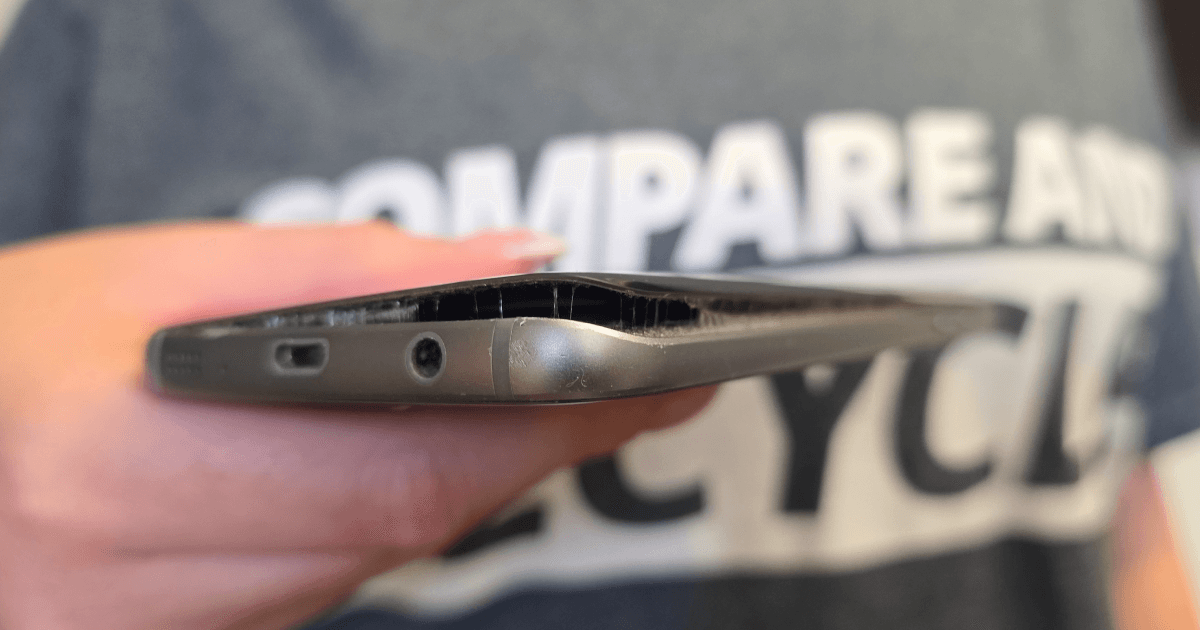
Storing old phones isn’t as harmless as it seems. Here’s why it’s worth digging out your old phone to avoid a hazardous situation.


In this first part of our Holiday Mode On series, we’ll cover essential accessories you need to pack to protect your phone from mishaps when on holiday.
We've done the digging on what UK networks and major cruise lines actually charge in 2026 to stay connected, and how to avoid paying more than you need to.