0330 123 4609
Menu
Our most comprehensive iPhone depreciation study, updated for 2026, reveals how iPhones are holding their value and what are they worth now.

Written by Antonia, Head of Marketing | Consumer Electronics and Money-Saving
Last updated on 7 September 2026
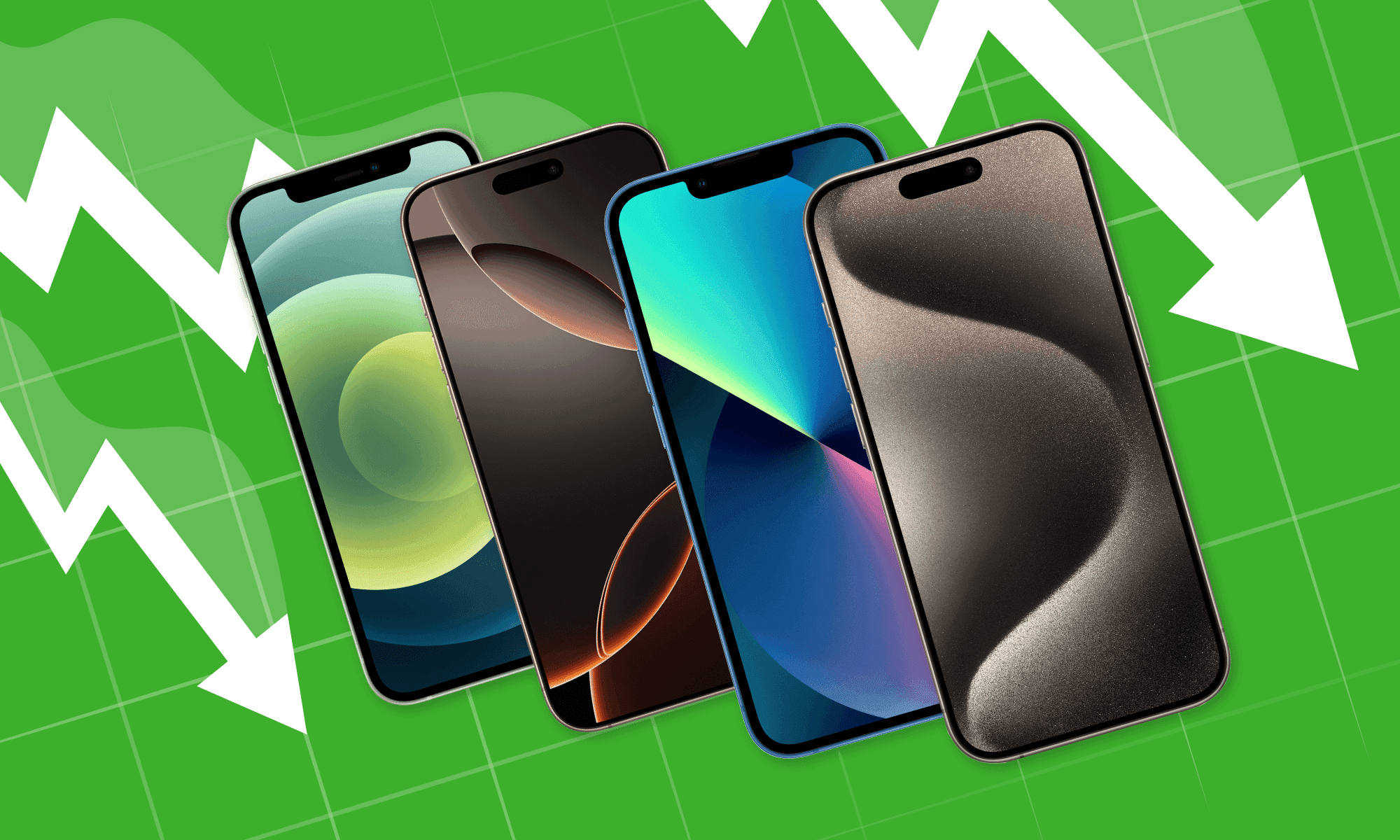
Our most comprehensive iPhone depreciation study, updated for 2026, reveals how iPhones — including the new iPhone 17 series and iPhone Air — are holding their value and what they're worth now.
In our most comprehensive iPhone price tracking study yet — updated for 2026 — we've analysed trade-in values for every model since the iPhone 11, including a full first year of trade-in data on the iPhone 17, iPhone 17 Pro, iPhone 17 Pro Max and the all-new iPhone Air. This deep dive reveals how much your older iPhone could be worth right now, and how the iPhone 17 launch has already reshaped resale prices across the rest of the iPhone portfolio.
Our data illustrates that the value of iPhones depreciates over time, with the highest depreciation rate from the original retail price occurring within the iPhone's first year on the market. The data we've analysed discloses more about what happens to iPhone resale prices when a new generation of iPhone gets released.
An iPhone can lose upwards of 25% of its retail value within the first month of release, and up to 58% in the first year of ownership — the iPhone 17 Pro Max 2TB was the worst-performing model we tracked this year, though it's also a brand-new, unprecedented storage tier with no prior generation to compare against.
Looking at the last four years of releases, the first-year depreciation rate worsened for three generations in a row: the iPhone 13 series lost 40.09% of its value on average in year one, the iPhone 14 lineup lost 50.72%, and the iPhone 15 series lost 51.22%. The iPhone 16 series was the worst yet, losing 53.13% on average. The iPhone 17 series broke that three-generation slide, dropping back down to 41.56% on average — the strongest first-year value retention of any generation since the iPhone 13, and £48.83 less lost per model, on average, than the iPhone 16 series.
The trend of Pro models depreciating slower than their non-Pro counterparts has narrowed sharply with the iPhone 17. The base iPhone 17 (-40.69%) and iPhone 17 Pro (-40.83%) depreciated at almost identical rates in their first year — for the first time in years, paying more for a Pro model bought no real resale advantage. The Pro Max line kept a real edge, but only once you set aside its new 2TB option: excluding that, Pro Max models averaged -37.25%, still the best of the three tiers.
The largest drops for older models occur as new iPhones are released or just prior to release/after the September announcement. The iPhone 17 launch in September 2025 knocked between 14% and 22% off older models' resale prices depending on generation, the iPhone 15 range was hit hardest (-21.85%) and the iPhone 16 range — likely because it had already dropped so much in its own first year — was hit comparatively gently -14.15% by the release of iPhone 17 series.
Through the month of August and early September, trade-in prices are traditionally at their highest, hence it's the best time to sell your iPhone.
During the second year post-release, iPhones reach a plateau and depreciate much slower than in the years before and after. The iPhone 16 series has just completed its second year on the market and depreciated by an average of just 1.26% between September 2025 and September 2026, a dramatic turn of events from the 53% drop in year one. Three models — the 128GB, 256GB and Pro 256GB — actually gained resale value year-on-year.
The secondhand iPhone market matters more than ever. With retail prices for the latest flagships now comfortably cruising above £1,000, the range-topping iPhone 17 Pro Max 2TB launching at £1,999 is a prime example - what you get back for your old handset makes up an increasingly large share of the true cost of upgrading. Add Apple's near-annual release cycle into the mix, and trade-in values are rarely static: every new launch doesn't just set the price of the newest models, it reshapes resale values for every iPhone still in circulation.
That knock-on effect has been visible since the iPhone 11, and the iPhone 17 launch in September 2025 had a similar effect on the current lineup, as you'll see throughout this depreciation study.
In their first 12 months since launch, the iPhone 17, iPhone 17 Pro and iPhone 17 Pro Max models depreciated by an average of just 41.56% — the strongest first-year performance of any Apple flagship generation since the iPhone 13 (40.09%), and a sharp reversal after three straight generations of worsening value retention (iPhone 14: 50.72%, iPhone 15: 51.22%, iPhone 16: 53.13%). The standout performer was the entry iPhone 17 Pro Max 256GB, which held onto 67.3% of its £1,199 retail price after a year, losing just 32.71% (£392.24) — the best result of any model in the entire current lineup.
Depreciation of iPhone 17 series based on resale price tracking.
For the first time in several generations we observed that the statement we made before about Pro models holding value better is no longer true: the base iPhone 17 (-40.69%) and iPhone 17 Pro (-40.83%) depreciated at almost identical rates. The Pro Max was pushed into the highest depreciation rate of the series by the brand-new 2TB variant.
Bigger storage didn't mean better value retention. The range-topping iPhone 17 Pro Max 2TB (£1,999) lost 58.43% of its value in its first year — nearly double the percentage loss of the entry Pro Max 256GB — despite costing £800 more. Its price didn't fall in a straight line either: it climbed from £830 in October 2025 to over £1,000 by June 2026, before slipping back to £831 by September 2026 — almost exactly where it started twelve months earlier.
Every directly comparable iPhone 17 model retained more cash value than its iPhone 16 equivalent did at the same point in its lifecycle — £94.94 more per model on average. The biggest improvement came from the entry iPhone 17 (256GB), which held onto £173.80 more than the iPhone 16 (256GB) at the same age, equivalent to £14.48 extra retained every month.
The iPhone Air, Apple's new ultra-thin model replacing the Plus line, had a rough first year on the market and might not get a successor. Across its three storage options it depreciated by an average of 60.41% in its first 12 months — losing £728.42 in cash terms — nearly 20 percentage points worse than the iPhone 17, iPhone 17 Pro and iPhone 17 Pro Max lineup over the same period, and on par with foldable Android smartphones.
Depreciation of iPhone Air models based on resale price tracking.
Storage capacity followed the pattern seen across every other current model: the 256GB held up best, losing 57.27% (£572.13) of its £999 retail price, while the 512GB dropped 60.47% (£725.00) and the 1TB fared worst of all, losing 63.48% (£888.13) of its £1,399 retail price — the steepest first-year loss of any model Apple currently sells.
As a genuinely new form factor, the iPhone Air has no direct predecessor to benchmark against. The closest comparison available is the Plus line it replaces: the iPhone 14 Plus, 15 Plus and 16 Plus models lost an average of 51.02%, 54.95% and 49.38% of their value respectively in their first year. The Air's 60.41% is meaningfully worse than all three, though it's too early to say whether that reflects a genuinely weaker resale market for the Air specifically, or simply the usual bumpy first year new Apple product categories tend to have. That will only become clear if and when Apple releases a second-generation Air to compare against.
Depreciation of iPhone 16 series based on resale price tracking
In its first 12 months on the market, the iPhone 16 series depreciated by an average of 53.13%, a drop of £615.26 across the lineup — the worst first-year performance of any generation we tracked, and the third year in a row that year-one depreciation got worse.
The steepest drops came from the higher-capacity models: the iPhone 16 Pro 1TB lost 59.45% of its value (£891), the iPhone 16 512GB dropped 59.01% (£649), and the iPhone 16 Pro 512GB fell by 54.29% (£705). Storage capacity, once again, proved to be the single biggest factor in how well a model held its value.
Not every model fared badly — the entry iPhone 16 Pro 128GB and Pro 256GB held up best of the whole series, losing 48.45% (£484) and 51.93% (£571) respectively, continuing the pattern that the lowest-capacity Pro models tend to be the smartest resale choice.
The iPhone 16 has now completed a full second year on the market, and the picture has changed dramatically: average depreciation across the lineup nearly stopped altogether, at just -1.26% between September 2025 and September 2026. Three models — the 128GB (+£31, +8.1%), 256GB (+£28, +6.8%) and Pro 256GB (+£42, +7.9%) — actually gained resale value year-on-year, most likely reflecting tightening supply of used stock as owners hold onto their phones for longer. This is the clearest evidence yet in our data of the "second year plateau" pattern.
The iPhone 17 launch in September 2025 knocked a comparatively gentle 14.15% off iPhone 16 trade-in prices around release — the smallest launch-related hit of any generation last year, likely because so much of the value had dropped during its rough first year.
Sell your iPhone 16 Pro nowGet up to £603.00!With four iPhones to choose from and multiple capacities in between, bringing the total number of devices in this lineup to 13, the iPhone 15 series lost an average of 51.22% of its value (£589) in its first 12 months on the market.
Depreciation of iPhone 15 series based on resale price tracking
Sell your iPhone 15 nowGet up to £345.00!The Plus models were hit hardest, continuing the pattern seen since the model's introduction: the 512GB Plus variant lost 58.92% of its value (£706.50), the worst result in the entire 15 lineup, with the 256GB Plus close behind at 55.18% (£551.27).
The Pro range fared better in relative terms — the Pro 128GB and 256GB variants lost the least of the whole lineup, dropping 45.84% (£458) and 46.91% (£516) respectively.
Now entering its third year on the market, the iPhone 15 series has settled at an average of 67.27% below its original retail price, with the Pro Max 1TB the hardest hit (-70.86%) and the entry 128GB holding up best (-64.00%).
September 2025's iPhone 17 launch was tougher on the iPhone 15 than on any other generation we tracked, cutting resale values by an average of 21.85% in the run-up to and post release — the single biggest launch-related hit of any generation in this year's study.
Sell your iPhone 15 Pro nowGet up to £450.00!In its first 12 months on the market, the iPhone 14 series depreciated by an average of 50.72% (£563) — in the same range as the iPhone 15 that followed it, and part of the multi-year tendency in year-one value retention that was reversed by iPhone 17 series.
The Pro range's biggest storage options fared worst: the iPhone 14 Pro 1TB lost 59.83% of its value (£987), the single worst first-year result of the entire 14 lineup, while the base 128GB was the best performer, losing 40.48% (£283).
Now three years old, the iPhone 14 series sits at an average of 75.95% below RRP, with the Pro 1TB again the worst hit (-81.38%) and the entry 128GB the strongest holder of value (-71.65%). The iPhone 17 launch trimmed a further 16.68% off iPhone 14 resale prices on average around release.
Depreciation data of iPhone 14 to iPhone 14 Pro Max based on resale price tracking
Sell your iPhone 14 nowGet up to £236.00!The base iPhone 13 range lost between 33.57% and 44.07% of its value in year one depending on capacity, with the 512GB variant hit hardest (-44.07%, £475.50) and the entry 128GB holding up best (-33.57%, £261.50) — a pattern that's held consistent across nearly every generation we've tracked.
The Mini variants depreciated faster: the 512GB Mini lost 56.79% (£556) in its first year, by far the steepest drop of the entire 13 lineup, and a reminder that the smaller form factor never found strong resale demand. Neither did the Plus models, nor the iPhone Air.
Depreciation data of iPhone 13 models based on resale price tracking
Four years on, the base iPhone 13 and Mini models sit between 78.65% and 84.47% below their original prices, with depreciation now largely flattened out. The iPhone 17 launch sliced a further 15.29% off resale prices around release and with current trade-in prices hovering comfortably over £100, iPhone 13 series is having a good run.
During their first 12 months on the market, the iPhone 13 Pro and Pro Max lineup lost between 31.41% and 47.51% of value, with the biggest hit reserved for the range-topping Pro Max 1TB (-47.51%, £736) and the smallest for the Pro 256GB (-31.41%, £329.50) — at the time, the single best first-year result of any storage and tier combination in this entire study, a record the iPhone 17 Pro Max 256GB has since come close to but not quite matched.
Now over four years old, the Pro and Pro Max models sit between 75.62% and 81.78% below RRP, having flattened out considerably since their early years. The iPhone 17 launch had a modest impact, in line with the rest of the four-and-five-year-old models in this study.
Sell your iPhone 13 Mini nowGet up to £152.00!Sell your iPhone 13 nowGet up to £177.00!iPhone 12 models average trade-in price since release based on historic price tracking
The base iPhone 12 and Mini range lost between 49.40% and 54.04% of value in their first year, with the 256GB base model hit hardest (-54.04%, £512.80).
Five years on, these models have lost between 87.32% and 89.25% of their RRP — deep into the tail end of the depreciation curve, though still holding a small resale value, in the region of £88 to £208* depending on model and capacity. The iPhone 17 launch trimmed a further 17.36% off resale prices around release, still a meaningful hit even five generations on.
The iPhone 12 Pro and Pro Max lineup lost between 46.21% and 51.40% of value in year one, with the 512GB Pro variant hit hardest (-51.40%, £667.64).
Five years out, these models sit between 82.67% and 86.53% below RRP, having settled into the same long, slow tail as the rest of the 12 lineup.
*The price cited is correct at the time of writing.
Sell your iPhone 12 nowGet up to £102.00!Sell your iPhone 12 Pro Max nowGet up to £213.00!The iPhone lineup Apple unveiled back in September 2019 remains an interesting one six years on. The base models lost between 34.46% and 41.64% of their value in their first year, while the Pro and Pro Max models lost between 39.47% and 49.63% — modest by the standards of more recent generations.
Now six years old, the iPhone 11 series sits between 89.73% and 93.42% below its original retail price — deep obsolescence territory by any measure, though the base models are still holding onto resale value in the region of £58 to £132* depending on capacity. Even at six years old, the iPhone 17 launch still knocked a further 18.53% off resale prices on average — a reminder that every model in our study, however old, reacts to a new iPhone release.
*The price cited is correct at the time of writing.
iPhone 11 series average trade-in price since release
Sell your iPhone 11 nowGet up to £67.00!As Apple prepares to launch the iPhone 18, several older models have officially entered obsolete or unsupported territory. While some of these iPhones still hold resale value, they pose increasing risks for users due to discontinued iOS updates and lack of security patches.
If you're still using an iPhone XS, 8, 7, or earlier, it’s time to consider upgrading. These models are no longer eligible for the latest iOS versions, meaning they won’t receive critical security updates — putting your personal data at risk. Even the once-flagship iPhone X and iPhone XR have neared the end of their viable life span for daily use, despite holding onto decent trade-in value.
However, there’s still time to act. You can trade in these iPhones for cash before their value dips further. Reselling now, especially just before the iPhone 18 release date, is a smart move if you want to make the most of your aging device.
Trade-in Values of Older iPhones (as of September 2026)
| iPhone Model | Average Trade-in Value |
|---|---|
| iPhone XS/XS Max | £48 - £72 |
| iPhone XR | £43 - £52 |
| iPhone X | £28 |
| iPhone 8/8 Plus | £15 - £25 |
| iPhone 7/7 Plus | Around £10 |
If you want to buy one of the new iterations of the iPhone — whether that's a current-generation iPhone 17, iPhone 17 Pro, iPhone 17 Pro Max or iPhone Air, or you're planning ahead for whatever comes next — we wouldn’t be Compare and Recycle if we didn’t share data-backed advice advice with you:
Always plan your trade-ins around your phone upgrades and lock in a trade-in price before the new iPhone announcement to ensure the highest pay out for your old iPhone.
If you're looking to trade in your older iPhone and upgrade, do so during the first week of September, as demand for older iPhones among recyclers is at its highest and recyclers will be willing to pay extra for a working iPhone in good cosmetic condition.
For those of you who tend to upgrade to brand new flagships, keep your eyes peeled for the announcement date and place your trade-in order on launch day at the latest.
Lower-capacity iPhone models depreciate at a lower rate in the first year, so if you're a frequent upgrader, consider opting for the lowest-capacity model that suits your needs.
Don’t assume Pro automatically means better value for money, our data suggests it used to be the case, but the latest iPhone 17 changed the narrative. We’re yet to see if this trend is here to stay, or if the 2025 iPhone release is an outlier.
If you're drawn to the iPhone Air specifically, be aware it's depreciating faster than any other current model, likely reflecting its status as an unproven, brand-new form factor.
Make sure you follow our step-by-step guide to completely remove your personal data from your phone before selling it.
With value drops this steep, it remains financially sensible not to chase the newest release every year — keeping your current iPhone for longer, or buying a refurbished iPhone, continues to be the more cost-effective and environmentally responsible choice.
Using Compare and Recycle's historic price tracking, we've analysed averaged monthly trade-in price data across all variants of iPhone models since the release of the iPhone 11 in September 2019 to the iPhone 17 and iPhone Air in September 2025, to determine the depreciation rate of older iPhone generations over time and how each new iPhone release impacts trade-in values.
iOS 27 is here! Check out key features and whether your iPhone is compatible.

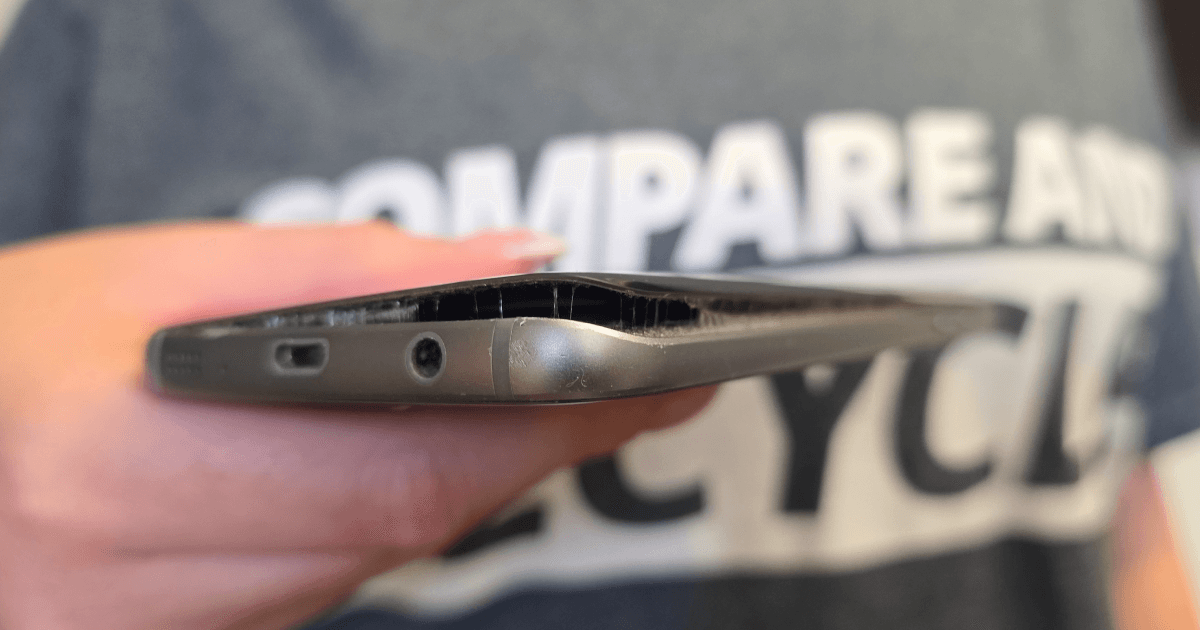
Storing old phones isn’t as harmless as it seems. Here’s why it’s worth digging out your old phone to avoid a hazardous situation.

In this first part of our Holiday Mode On series, we’ll cover essential accessories you need to pack to protect your phone from mishaps when on holiday.